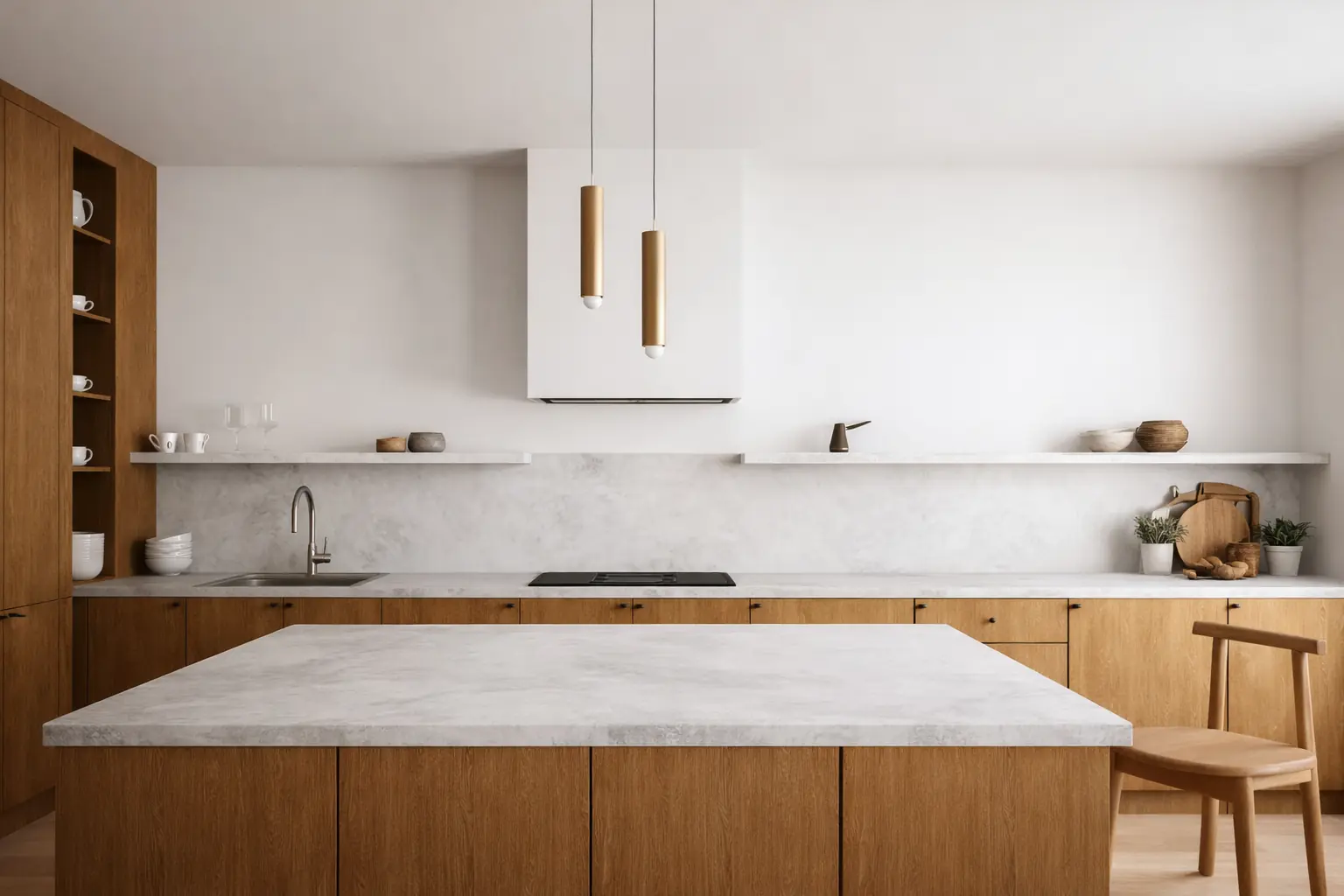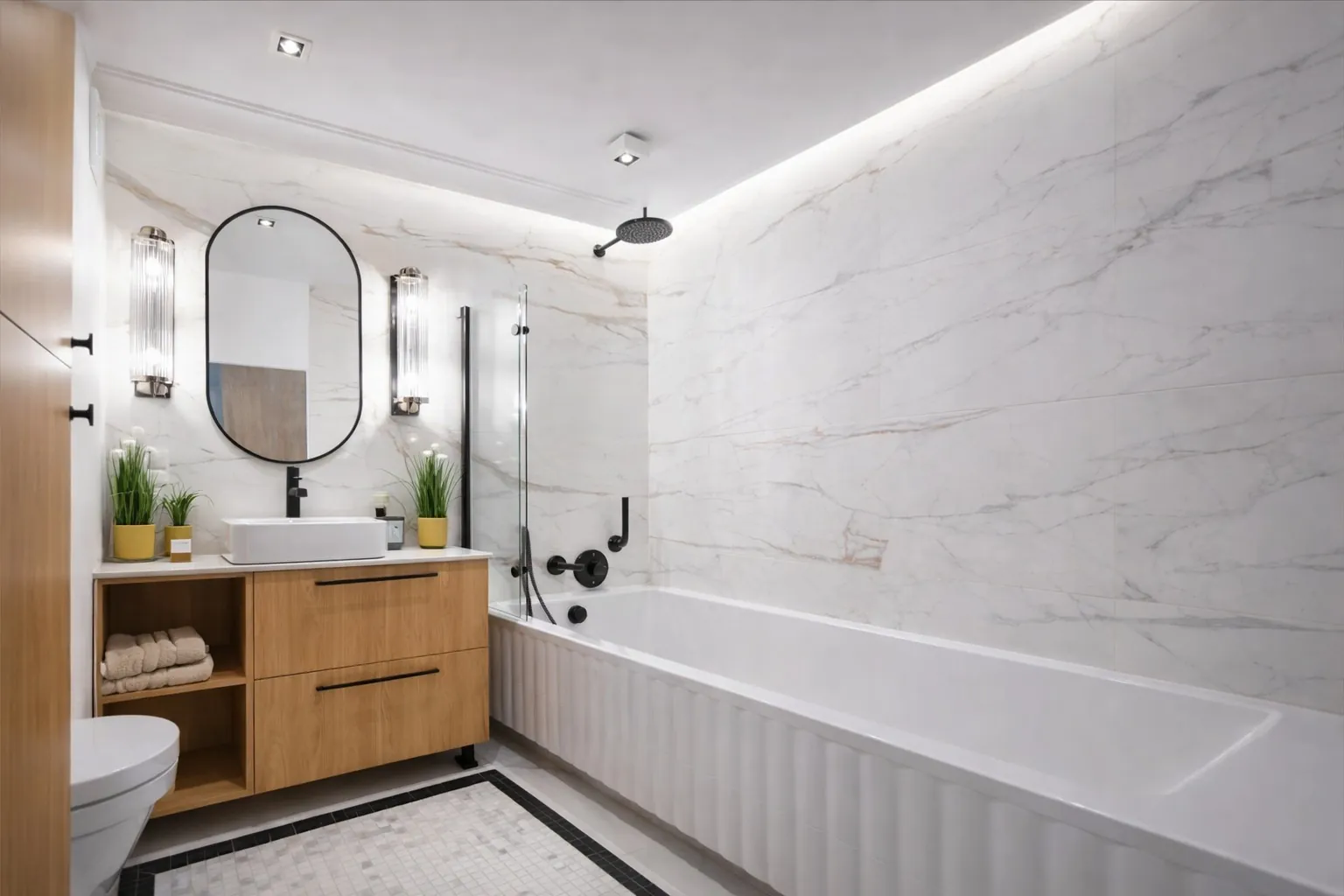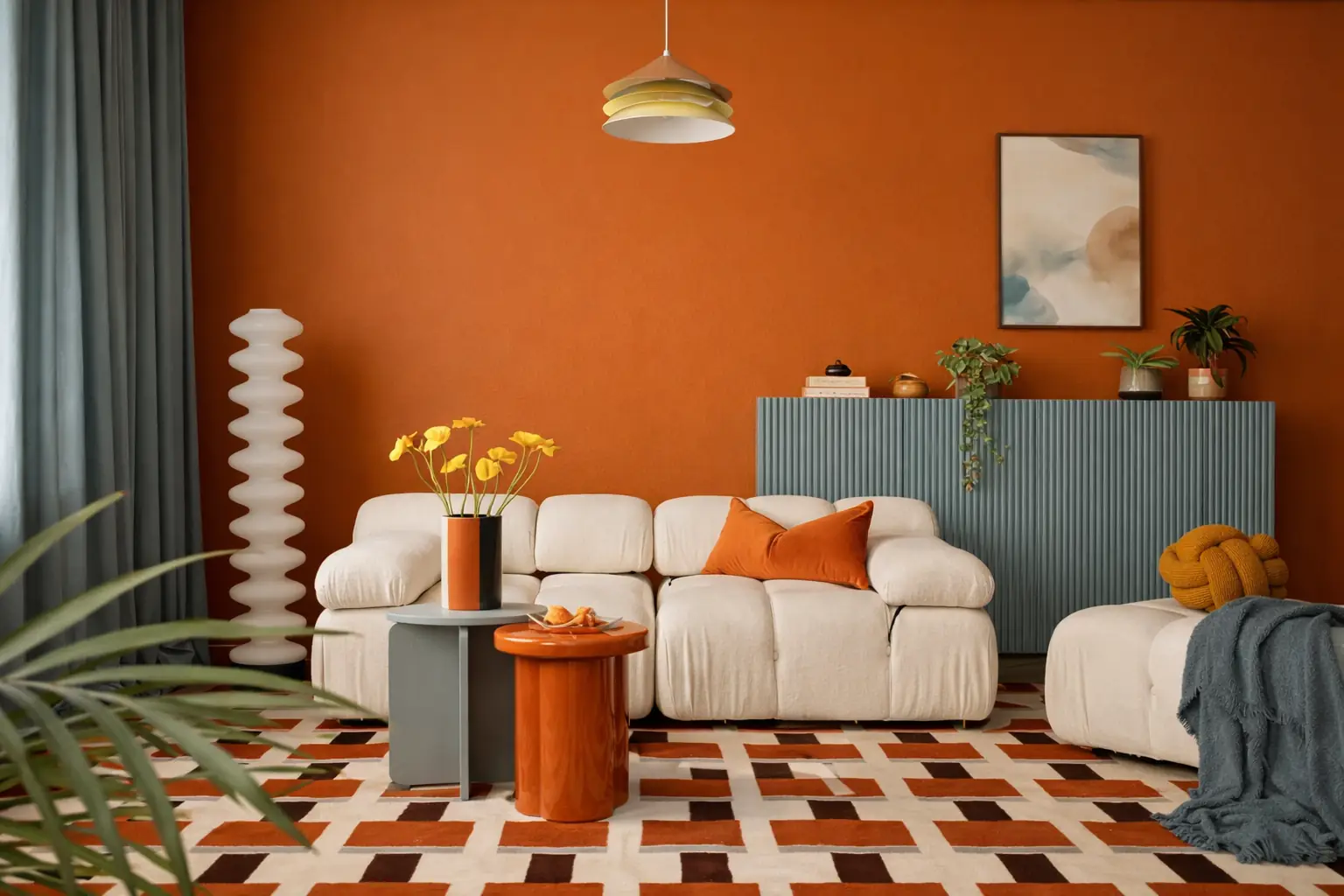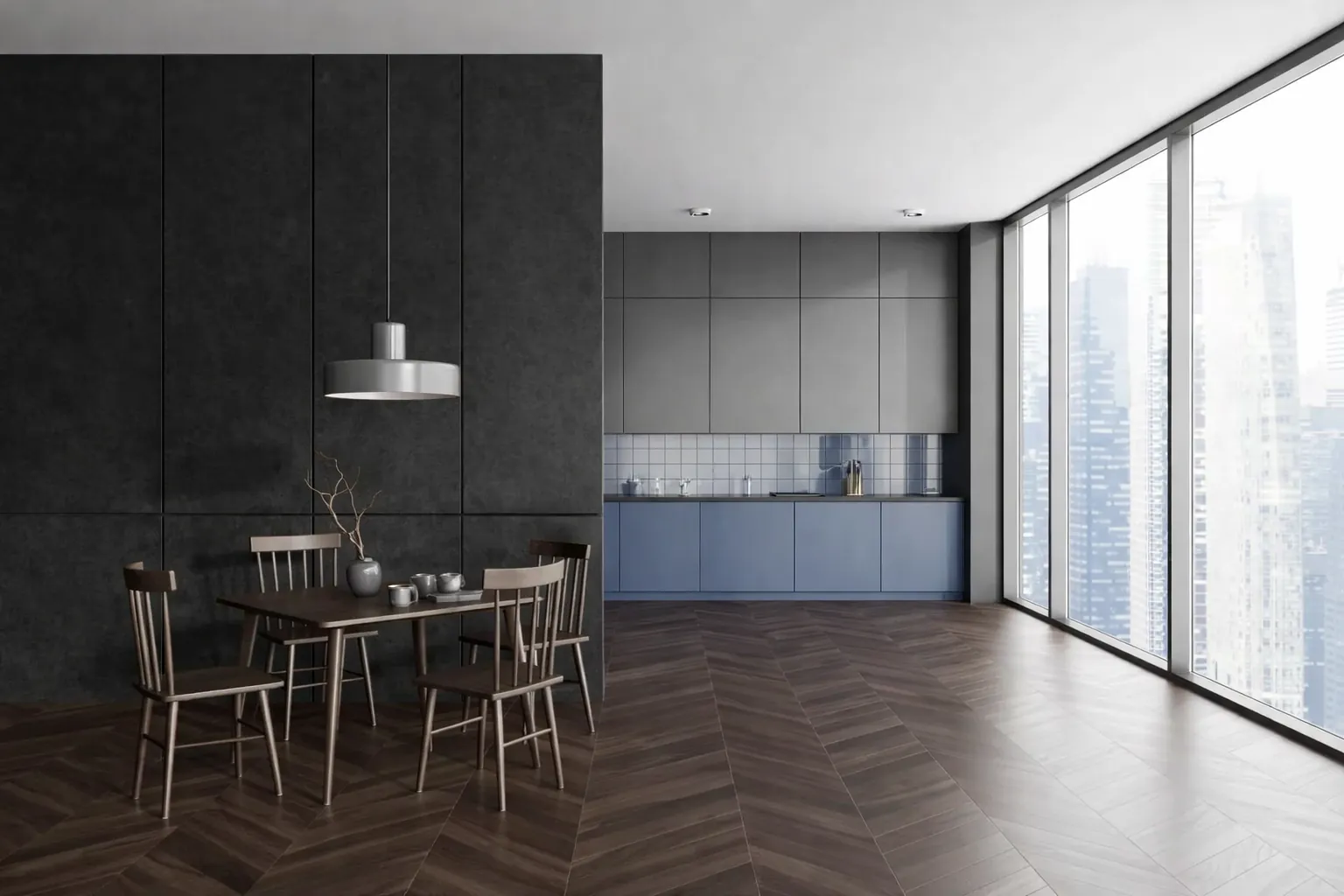



If you live in a city apartment, you already know the scene. The main door opens, and boom, you can see the sofa, TV unit, dining table, and the kitchen platform in one straight line. In compact 2BHK and 3BHK flats, especially in gated communities of Mumbai and Bangalore, the hall and kitchen sit shoulder to shoulder.
A smart hall and kitchen partition is not about adding a divider. It’s about controlling movement, sightlines, and visual weight so the home feels organised instead of crowded. Let’s break down the layout rules that actually work.
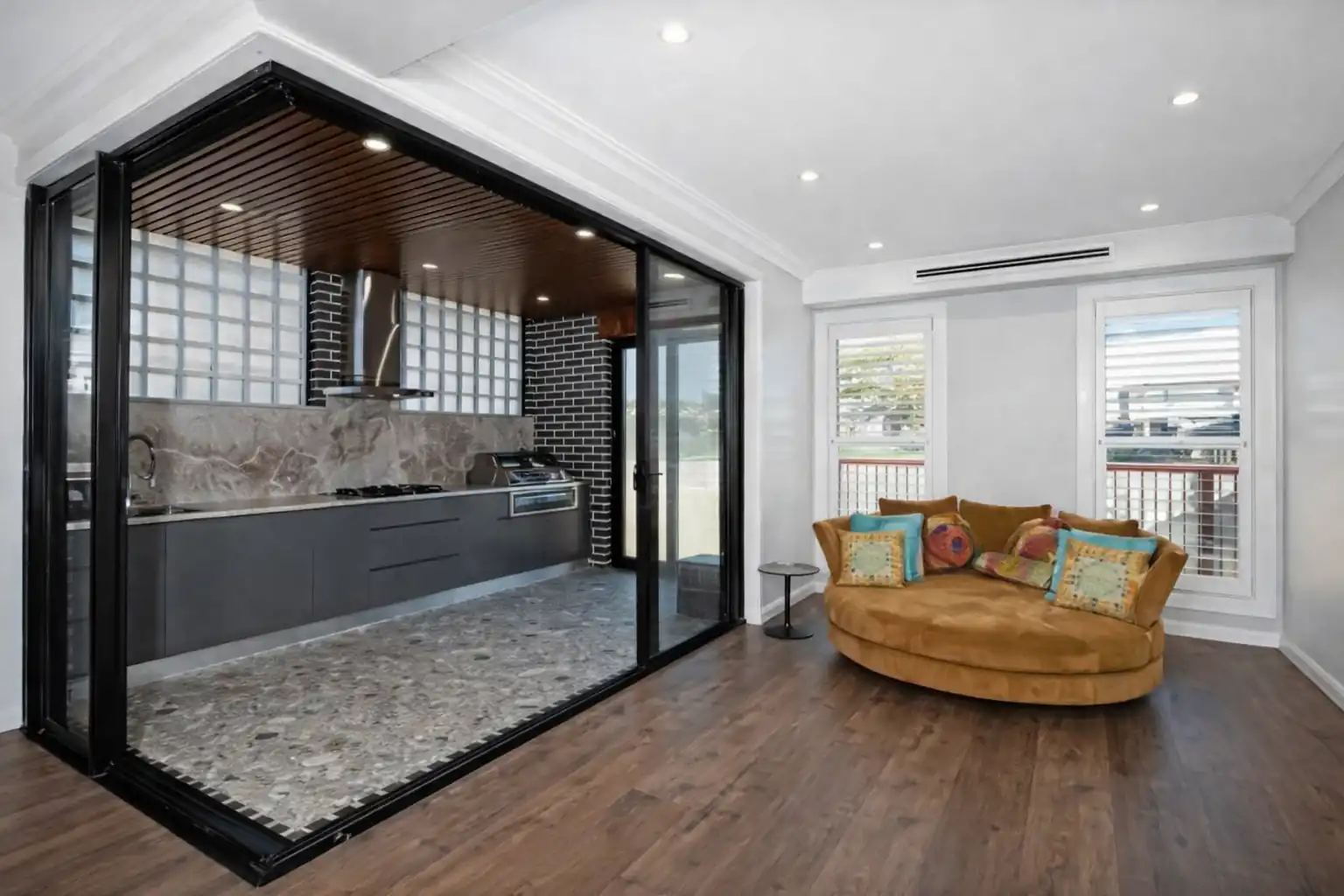
Most homeowners begin by asking, “glass or wood? Sliding or fixed?” But before picking specific materials or styles for a hall partition design, you need to observe how you move through your living room. What’s the first thing you see from your entrance? Is the kitchen sink directly visible? Does the circulation path cut awkwardly through the middle of the living room?
These considerations are especially important in compact Mumbai homes, where the wrong partition placement can reduce space rather than delegate zones. Interior designers in Mumbai look at the entry sightline, the central walking path, and the distance between the sofa and the kitchen counter. If a hall and kitchen partition interrupts the natural walking flow, the room shrinks visually. If it aligns with movement, the home feels intentional and bigger. Experienced Mumbai designers use these principles to maximise space and facilitate the flow of natural movement, preventing the apartment from feeling cramped.
In most apartments, the door opens directly into the living area. If the kitchen slab, hanging vessels, or fridge are visible immediately, the house feels cluttered, even if it’s clean. A well-placed kitchen partition from living room blocks just enough of the kitchen workspace while keeping the top area open for light. Keep the lower (3 to 4 feet) part of the partition solid and make the upper portion transparent or open. This protects visual privacy without creating a wall.
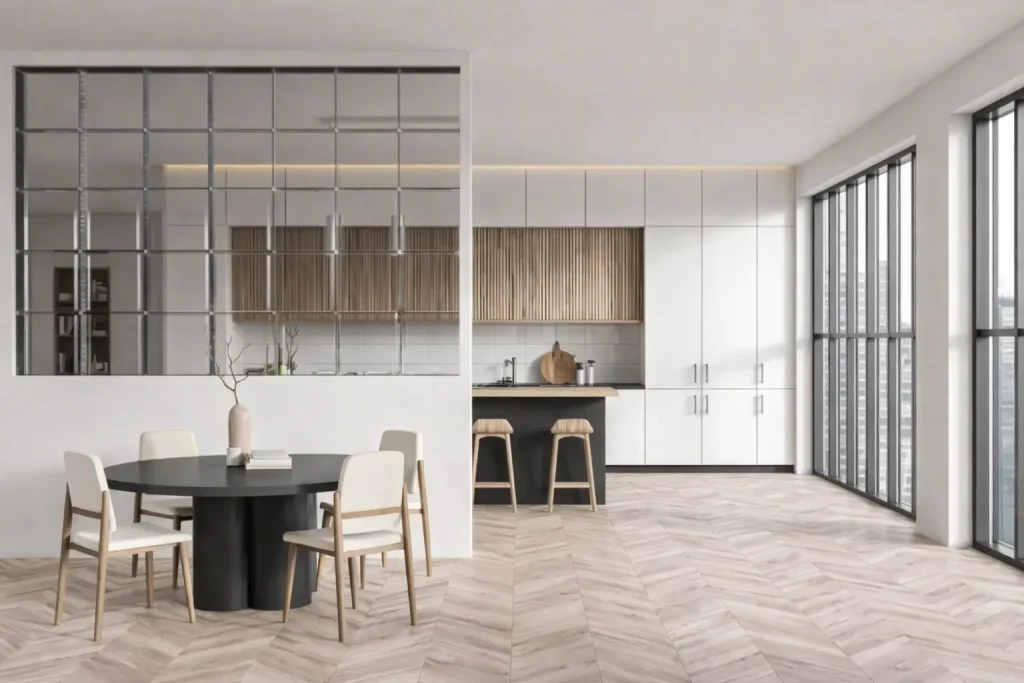
Nothing makes a space feel tighter than furniture pushed randomly around a divider. When planning a kitchen hall partition design, always keep a clear walkway at least 900–1000 mm wide. This ensures easy movement during morning rush, kids running around without bumping edges, and smooth hosting during festivals or house parties.
In city homes, clutter collects near transitions, school bags land near the dining table, grocery bags sit at the kitchen entry, and pet bowls migrate toward corners. If the hall and kitchen partition eats into that flexible buffer zone, your living room will feel cluttered and unclean. Smart layout planning keeps the central path visually and physically open.
You don’t need full-height dividers to separate spaces. Half-height counters are among the most effective kitchen partition ideas for compact homes. They hide countertop mess, double as breakfast counters, and create a psychological boundary that separates open layouts into a living room zone and a kitchen zone.
When paired with lighting above and ceiling alignment that visually extends across both spaces, the hall still feels connected. This approach to hall and kitchen partitions works especially well in apartments where natural light enters from only one side, as completely blocking the area with a wall can make it feel dull and dark.
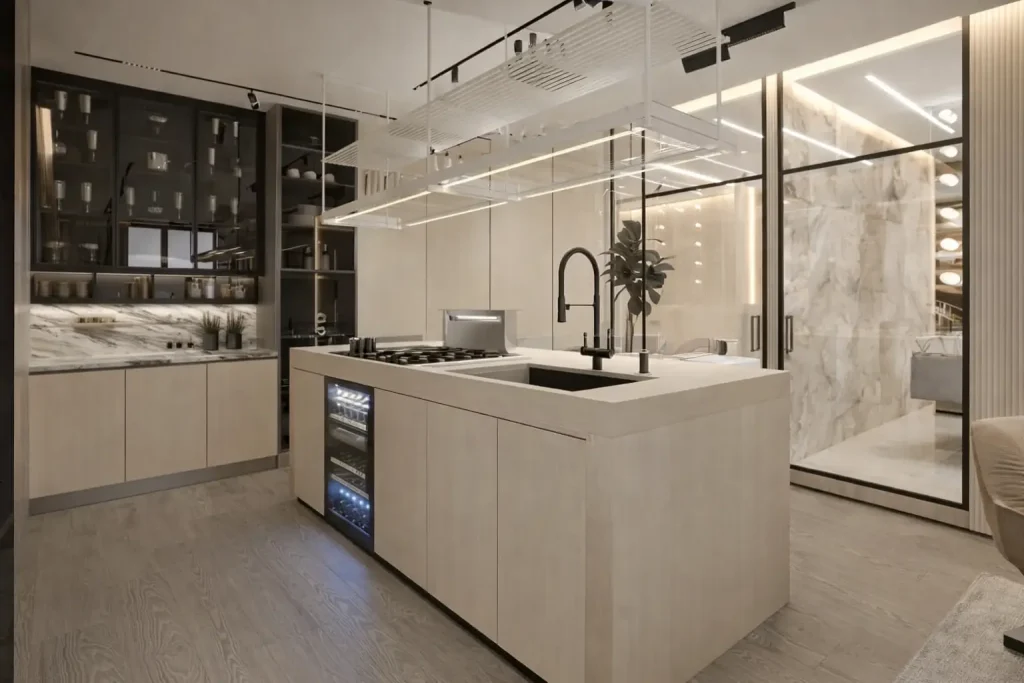
Hall and kitchen partitions made of glass are popular, but not all glass behaves the same way:
In humid, tropical climates where ventilation matters, fixed glass panels must be planned in conjunction with chimney suction and AC throw. Otherwise, cooking smells linger in the living room. An intelligent partition design for hall and kitchen balances chimney placement, cross ventilation, natural light direction, and artificial lighting layers
Hall and kitchen partitions with open shelving look picture-perfect. But in reality? They demand organisation. If you’re someone who loves décor styling and maintains clutter-free surfaces, open shelves can display plants and books, let light travel freely, and add vertical storage.
But in busy family homes, shelves quickly become dumping zones. Bills, keys, courier packages, festival décor, everything lands there. Before committing to this type of hall partition design, ask yourself honestly, will this stay styled, or become an overstuffed storage space?
Continuity truly makes a home feel premium. If your flooring abruptly changes at the partition, the space appears to shrink. Instead, designers often continue the same flooring while using ceiling treatments or subtle lighting shifts to define zones.
Cove lighting above the living area and task lighting in the kitchen create invisible boundaries. The eye reads separation without seeing a physical block. That’s how a hall and kitchen partition becomes part of a complete spatial story rather than a random add-on.
A partition should not divide your home. It should organise it. When placed with layout logic, a hall and kitchen partition can:
In small city apartments, space is fixed, but your perception isn’t. Smart design can visually enlarge your house even if the square footage is modest.
At Bonito Designs, partitions are never treated as standalone elements. They are planned as part of a full spatial ecosystem under their LifeDesign philosophy.
This means:
With deep experience across city apartment layouts, from compact high-rise units to larger builder-floor homes, their team understands how local building structures behave. Ventilation patterns, beam placements, and duct positions are all factored in before finalising a kitchen hall partition design.
Because execution is handled in-house, quality control stays consistent. ISO-certified processes ensure that what’s designed on paper translates accurately on site. From concept to build to QC to handover, the workflow remains streamlined.
The right hall and kitchen partition depends less on trends and more on lifestyle patterns. Book a consultation with Bonito Designs today!